
Unlock the power of managed services for your SMB! Discover the top 7 benefits, focusing on cost-efficiency and enhanced security that could transform your business.
Understanding Managed Services
In today’s fast-evolving technological landscape, small and medium-sized businesses (SMBs) face an array Understanding Managed Services
Managed services have become an essential component for Small and Medium-sized Businesses (SMBs) looking to enhance their operational efficiency and security. Essentially, managed services involve outsourcing certain IT functions to a third-party provider, known as a Managed Service Provider (MSP). These providers take over a range of tasks, from network management and data storage to cybersecurity and compliance monitoring, allowing businesses to focus on their core activities. By leveraging the expertise of MSPs, SMBs can ensure that their IT infrastructure is both robust and up-to-date without the burden of managing it in-house.
One of the primary advantages of managed services is the proactive approach taken to IT management. Instead of waiting for something to go wrong, MSPs continuously monitor systems to identify and resolve issues before they escalate into significant problems. This proactive stance not only minimizes downtime but also ensures that potential vulnerabilities are addressed promptly, safeguarding the business from potential threats. Additionally, MSPs provide regular updates and maintenance, ensuring that all systems run smoothly and efficiently.
Furthermore, the managed services model is highly scalable, making it a perfect fit for growing SMBs. As businesses expand, their IT needs evolve, and managed services can easily adapt to these changes. Whether it’s adding new users, integrating new technologies, or expanding network capabilities, MSPs can provide the necessary support without the need for substantial internal investment. This flexibility allows SMBs to grow without being constrained by their IT infrastructure, making managed services an invaluable asset for any forward-thinking business.
Cost Efficiency: How Managed Services Save Money
One of the most compelling reasons for SMBs to adopt managed services is the significant cost savings they offer. Traditional in-house IT departments can be expensive to maintain, requiring substantial investments in personnel, training, and equipment. Managed services, on the other hand, operate on a subscription-based model, allowing businesses to pay a predictable monthly fee for the services they need. This model not only reduces upfront costs but also provides a clear and manageable IT budget.
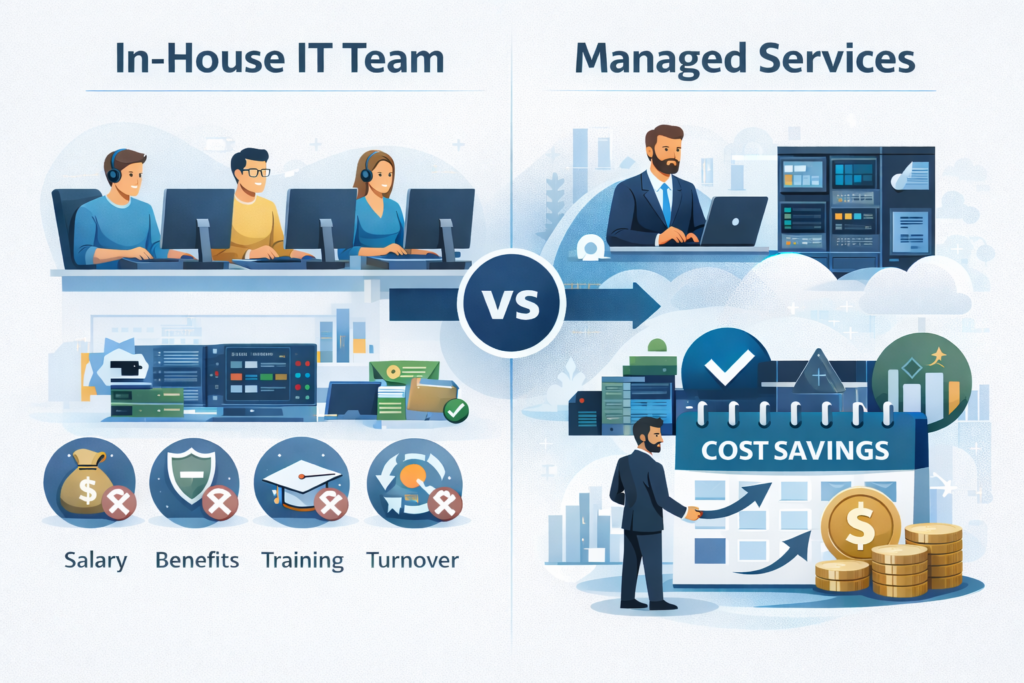
By outsourcing IT functions to an MSP, SMBs can eliminate the need for a large in-house IT team. This reduction in staffing costs includes not only salaries but also benefits, training, and turnover-related expenses. Additionally, MSPs often have access to bulk purchasing agreements and vendor relationships that can further reduce the costs of software and hardware. These savings can be substantial, freeing up resources that can be reinvested into other areas of the business.
Moreover, managed services can help avoid the hidden costs associated with downtime and IT failures. When systems go down, the resulting loss of productivity and revenue can be significant. MSPs mitigate this risk through proactive monitoring and maintenance, ensuring that issues are addressed before they impact business operations. This proactive approach reduces the likelihood of costly disruptions and ensures that SMBs can maintain continuous and efficient operations.
Enhanced Security: Protecting Your Business Data
In today’s digital landscape, cybersecurity is a top concern for businesses of all sizes. For SMBs, the stakes are particularly high, as they often lack the resources and expertise to effectively combat sophisticated cyber threats. Managed services offer a robust solution to this challenge, providing comprehensive security measures that protect business data from a wide range of threats. MSPs employ advanced security technologies, including firewalls, intrusion detection systems, and encryption, to safeguard sensitive information.
One of the key benefits of managed services is the continuous monitoring and management of security protocols. MSPs keep a vigilant eye on network activity, detecting and responding to potential threats in real time. This proactive approach ensures that vulnerabilities are identified and addressed before they can be exploited by malicious actors. Additionally, MSPs conduct regular security assessments and audits to ensure that all systems are compliant with the latest security standards and best practices.
Another critical aspect of cybersecurity is employee training and awareness. Human error remains one of the leading causes of data breaches, and MSPs can provide comprehensive training programs to educate employees about the latest threats and best practices for avoiding them. By fostering a culture of security awareness, SMBs can significantly reduce their risk of falling victim to cyberattacks. With managed services, businesses can rest assured that their data is protected by a multi-layered security strategy that evolves to meet emerging threats.
Access to Expertise: Leveraging Professional Knowledge
For many SMBs, access to specialized IT expertise can be a significant challenge. Hiring skilled professionals with the necessary knowledge and experience is often prohibitively expensive, and maintaining an in-house team that can handle the full spectrum of IT needs is rarely feasible. Managed services bridge this gap by providing access to a team of highly trained and experienced IT professionals who bring a wealth of knowledge to the table. This access allows SMBs to leverage the latest technologies and best practices without the associated costs of hiring and training.
MSPs typically employ experts in various fields, including network management, cybersecurity, cloud computing, and compliance. This diverse expertise ensures that SMBs receive comprehensive support across all aspects of their IT infrastructure. Whether it’s implementing a new software solution, optimizing network performance, or ensuring compliance with industry regulations, MSPs have the expertise to deliver effective and efficient solutions.
Furthermore, the knowledge and experience brought by MSPs can lead to more innovative and strategic use of technology. By staying abreast of the latest industry trends and advancements, MSPs can provide valuable insights and recommendations that help SMBs stay competitive. This strategic guidance can drive digital transformation initiatives, streamline operations, and improve overall business performance. With managed services, SMBs gain a trusted partner who can guide them through the complexities of IT management and help them achieve their business goals.
Scalability: Adapting to Your Business Needs
Scalability is a crucial consideration for any growing business. As SMBs expand, their IT requirements become more complex, necessitating a flexible and adaptable approach to IT management. Managed services offer the scalability needed to accommodate business growth, allowing SMBs to seamlessly adjust their IT resources in response to changing needs. Whether it’s adding new users, expanding network capabilities, or integrating new technologies, MSPs provide the support necessary to ensure that IT infrastructure can grow alongside the business.
One of the primary advantages of managed services is the ability to quickly scale up or down based on demand. This flexibility is particularly beneficial for businesses that experience seasonal fluctuations or sudden growth spurts. Instead of investing in additional hardware, software, and personnel, SMBs can simply adjust their service level with their MSP. This on-demand scalability ensures that businesses have the resources they needwithout the burden of over-provisioning or underutilization.
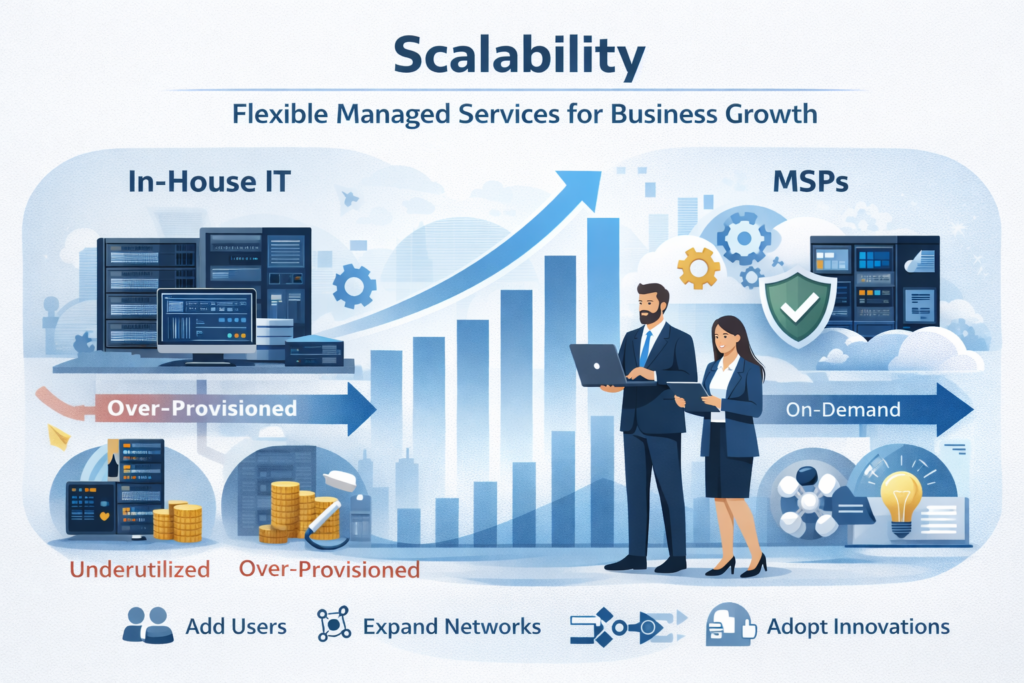
Moreover, managed services enable SMBs to adopt new technologies and solutions more rapidly. MSPs have the expertise and resources to implement and manage the latest innovations, ensuring that businesses can take advantage of cutting-edge tools and platforms. This agility allows SMBs to stay competitive in a fast-paced market, responding quickly to new opportunities and challenges. By providing a scalable and adaptable IT infrastructure, managed services empower SMBs to grow and thrive without being constrained by their technology.
Improved Focus on Core Business Activities
Managing IT infrastructure can be a significant distraction for SMBs, diverting valuable time and resources away from core business activities. By outsourcing IT functions to an MSP, businesses can refocus their efforts on what they do best—serving their customers and growing their operations. Managed services take over the day-to-day management of IT systems, allowing business owners and employees to concentrate on strategic initiatives and revenue-generating activities.
One of the key benefits of managed services is the reduction in IT-related disruptions and downtime. MSPs proactively monitor and maintain systems, ensuring that issues are resolved before they impact business operations. This proactive approach minimizes interruptions and allows employees to work more efficiently and productively. With reliable and efficient IT support, businesses can maintain a steady focus on their core objectives without being sidetracked by technical problems.
Additionally, managed services provide peace of mind by ensuring that IT infrastructure is in capable hands. Business owners can rest assured that their technology is being managed by experienced professionals who are dedicated to maintaining optimal performance and security. This confidence allows them to make more informed decisions and pursue growth opportunities without the constant worry of IT-related challenges. By partnering with an MSP, SMBs can unlock their full potential and achieve greater success.
Proactive IT Management: Preventing Issues Before They Arise
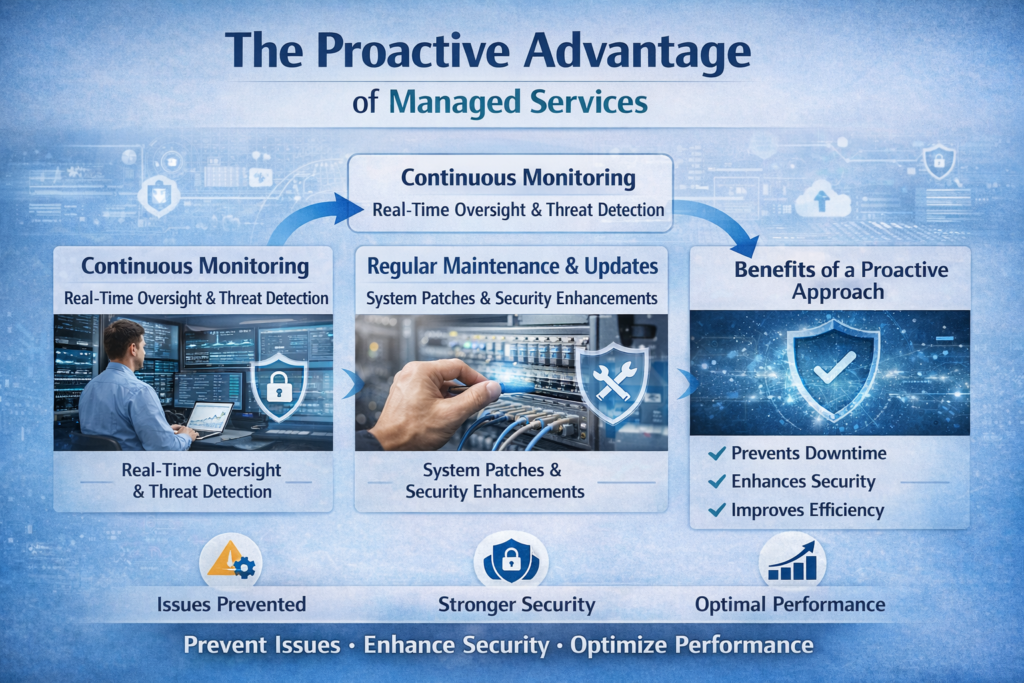
A significant advantage of managed services is the proactive approach to IT management. Unlike traditional reactive models, where issues are addressed only after they occur, MSPs focus on preventing problems before they arise. This proactive stance involves continuous monitoring, regular maintenance, and timely updates to ensure that systems remain secure, efficient, and reliable. By identifying and addressing potential issues early, MSPs minimize the risk of downtime and disruptions.
Continuous monitoring is a cornerstone of proactive IT management. MSPs use advanced monitoring tools to keep a constant watch on network activity, system performance, and security threats. This real-time oversight allows them to detect anomalies and potential issues before they escalate into significant problems. Whether it’s a performance bottleneck, a security vulnerability, or an impending hardware failure, MSPs can take swift action to resolve the issue and prevent business disruption.
Regular maintenance and updates are also critical components of proactive IT management. MSPs ensure that all systems are kept up-to-date with the latest software patches, security updates, and firmware upgrades. This regular upkeep not only enhances system performance but also fortifies security by addressing known vulnerabilities. By maintaining an up-to-date IT environment, MSPs help businesses avoid the pitfalls of outdated technology and ensure that their systems are always operating at peak efficiency.
Compliance and Regulatory Support
Compliance with industry regulations and standards is a critical consideration for many SMBs, particularly those in highly regulated sectors such as healthcare, finance, and legal services. Failure to comply with these regulations can result in significant fines, legal penalties, and reputational damage. Managed services provide invaluable support in navigating the complex landscape of regulatory compliance, ensuring that businesses meet all necessary requirements and avoid costly violations.
MSPs possess extensive knowledge of industry-specific regulations and standards, such as HIPAA for healthcare, PCI-DSS for payment card processing, and GDPR for data protection. This expertise allows them to implement and manage compliance measures that align with these regulations, ensuring that all necessary safeguards are in place. From data encryption and secure access controls to audit trails and documentation, MSPs help businesses maintain compliance with the latest requirements.
In addition to implementing compliance measures, MSPs also provide ongoing monitoring and support to ensure that businesses remain compliant over time. This includes regular audits, risk assessments, and updates to compliance policies and procedures. By staying on top of regulatory changes and ensuring that all systems and processes are aligned with current standards, MSPs provide businesses with the peace of mind that comes from knowing they are meeting their legal and regulatory obligations.
Case Studies: Success Stories of SMBs Using Managed Services
To illustrate the transformative impact of managed services, let’s explore some success stories of SMBs that have leveraged these solutions to achieve significant improvements in cost efficiency, security, and overall business performance.
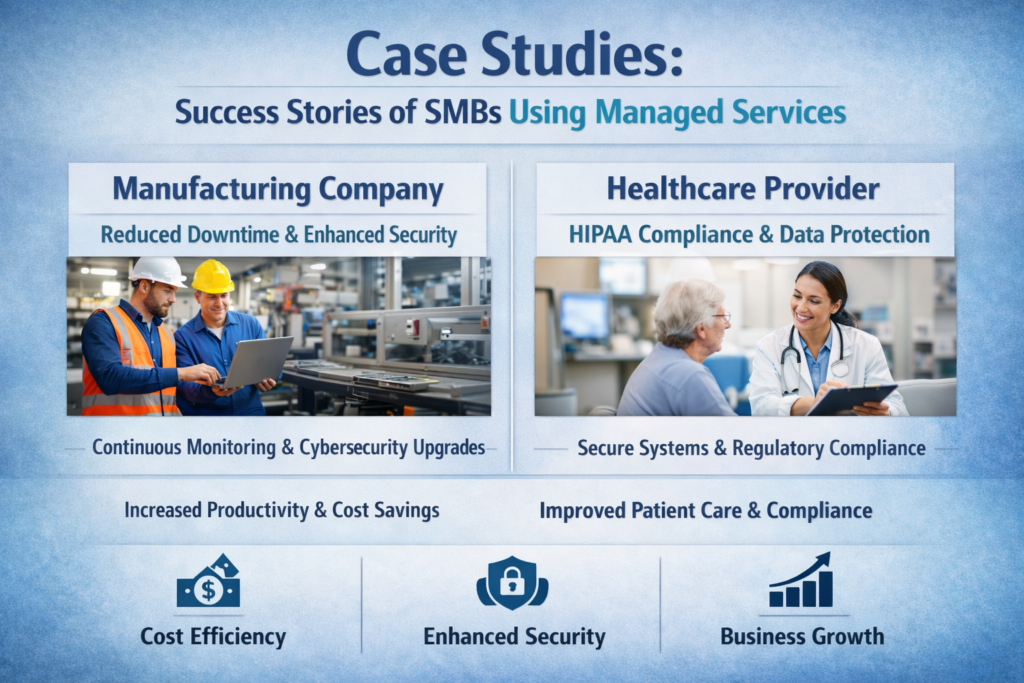
One notable example is a mid-sized manufacturing company that was struggling with frequent downtime and security breaches. By partnering with an MSP, the company implemented a comprehensive managed services solution that included continuous monitoring, regular maintenance, and advanced cybersecurity measures. As a result, the company experienced a dramatic reduction in downtime and security incidents, leading to increased productivity and a more secure IT environment. The cost savings from avoiding downtime and security breaches allowed the company to reinvest in new equipment and expand its operations.
Another success story comes from a small healthcare provider that needed to comply with stringent HIPAA regulations. The provider was overwhelmed by the complexity of compliance requirements and the risk of potential penalties. By engaging an MSP with expertise in healthcare compliance, the provider was able to implement robust data protection measures, secure access controls, and comprehensive documentation practices. The MSP also conducted regular audits and risk assessments to ensure ongoing compliance. This support not only mitigated the risk of regulatory violations but also allowed the healthcare provider to focus ondelivering high-quality patient care.
A third example involves a growing e-commerce business that faced challenges in scaling its IT infrastructure to meet increasing demand. The company turned to an MSP to design and manage a scalable cloud-based solution that could easily accommodate growth. The MSP provided ongoing support, ensuring that the e-commerce platform remained secure, reliable, and performant. This scalable solution enabled the business to handle peak traffic periods without issues, leading to higher customer satisfaction and increased sales. The flexibility and cost-efficiency of the managed services model allowed the company to expand rapidly without being constrained by IT limitations.
These case studies demonstrate the diverse ways in which managed services can benefit SMBs across different industries and challenges. By providing cost-effective, secure, and scalable IT solutions, MSPs empower businesses to overcome obstacles and achieve their goals. The success stories of these SMBs serve as a testament to the value of managed services in driving business growth and success.
Conclusion: Choosing the Right Managed Services Provider
Selecting the right Managed Service Provider (MSP) is a critical decision that can have a profound impact on the success of your business. With the right partner, SMBs can unlock the full potential of managed services and reap the benefits of cost efficiency, enhanced security, access to expertise, scalability, improved focus on core activities, proactive IT management, and compliance support. However, choosing an MSP requires careful consideration of several key factors.
First and foremost, it’s essential to evaluate the MSP’s expertise and experience in your specific industry. Different industries have unique IT requirements and regulatory considerations, so it’s crucial to choose a provider with a proven track record in your sector. Additionally, look for MSPs that offer a comprehensive range of services that align with your business needs, from network management and cybersecurity to cloud solutions and compliance support.
Another important consideration is the MSP’s approach to customer service and support. A reliable MSP should offer responsive and proactive support, with clear communication channels and a commitment to resolving issues promptly. Look for providers that offer Service Level Agreements (SLAs) that define the scope and quality of services, as well as metrics for performance and response times. This ensures that you have a clear understanding of what to expect and can hold the MSP accountable for delivering on their promises.
Finally, consider the MSP’s scalability and flexibility. As your business grows and evolves, your IT needs will change, and it’s important to choose a provider that can adapt to these changes. Look for MSPs that offer flexible service plans and the ability to scale resources up or down based on demand. This ensures that your IT infrastructure can grow with your business without unnecessary costs or constraints.
In conclusion, managed services offer a wealth of benefits for SMBs, from cost savings and enhanced security to access to expertise and scalability. By choosing the right MSP, businesses can harness these advantages and achieve greater success in an increasingly complex and competitive landscape. Whether you’re looking to reduce IT costs, improve security, or scale your operations, managed services provide the support and solutions you need to thrive. Take the time to evaluate your options and select a trusted MSP partner who can help you unlock the full potential of your business
📞 Free Consultation:
Phone: +91 8056005901
Email: Contact@altf9.tech
Official Website: https://altf9.tech