

Discover how managed IT services can propel your business growth in 2026, offering innovative solutions and streamlined operations for a competitive edge.
Understanding Managed IT Services
Managed IT services refer to the practice where businesses outsource their IT operations and responsibilities to a third-party service provider. These providers, known as Managed Service Providers (MSPs), take on the management of IT infrastructure, cybersecurity, network monitoring, and other IT-related tasks. The goal is to ensure optimal performance, security, and efficiency without the burden of maintaining an in-house ITdepartment.
In today’s fast-paced digital world, the demand for managed IT services is increasing. Businesses are looking for ways to stay competitive, and having a robust IT infrastructure is crucial. Managed IT services provide a comprehensive solution that covers all aspects of a company’s IT needs, from routine maintenance and support to advanced cybersecurity measures and strategic IT planning.
Moreover, MSPs offer a range of services tailored to the unique needs of each business. This includes cloud services, data backup and recovery, network management, and IT consulting. By leveraging these services, businesses can focus on their core operations while ensuring their IT systems are reliable, secure, and up-to-date.
The Role of Managed IT Services in Business Growth
Managed IT services play a pivotal role in driving business growth. One of the primary ways they do this is by enhancing operational efficiency. With MSPs handling the IT infrastructure, businesses can streamline their processes, reduce downtime, and improve productivity. This operational efficiency translates to better service delivery and increased customer satisfaction.
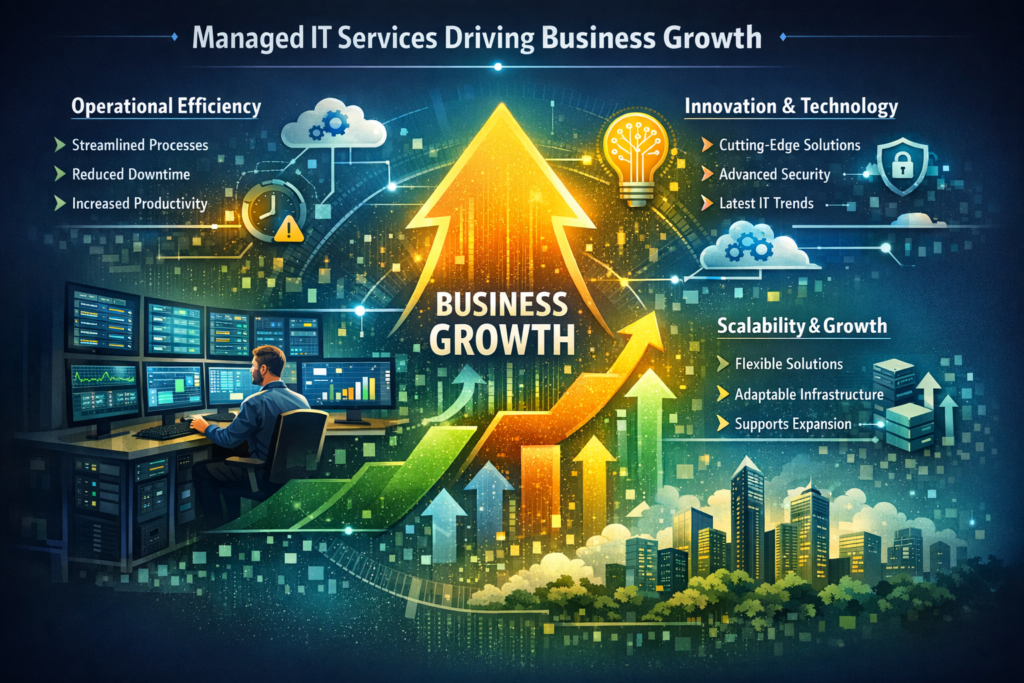
Another significant aspect is innovation. Managed IT services keep businesses at the forefront of technological advancements. MSPs are well-versed in the latest IT trends and technologies, which they can integrate into a company’s operations. This access to cutting-edge technology allows businesses to innovate, stay competitive, and meet the evolving demands of their customers.
Additionally, managed IT services support scalability. As businesses grow, their IT needs become more complex. MSPs provide scalable solutions that can adapt to the changing needs of the business. This scalability ensures that businesses can expand their operations without worrying about IT constraints, thus supporting sustained growth.
Key Trends in Managed IT Services for 2026
As we look towards 2026, several key trends are shaping the landscape of managed IT services. One of the most prominent trends is the increased adoption of artificial intelligence (AI) and machine learning (ML). These technologies are being used to enhance IT service delivery, from predictive maintenance to advanced cybersecurity measures. MSPs are leveraging AI and ML to provide smarter, more efficient services.
Cloud computing continues to be a major trend. Businesses are increasingly moving their operations to the cloud to take advantage of its flexibility, scalability, and cost-effectiveness. Managed IT services are evolving to support this transition, offering cloud migration, management, and optimization services. This trend is expected to grow as more businesses recognize the benefits of a cloud-first strategy.
Cybersecurity remains a top priority. With the rise in cyber threats, businesses are seeking robust security solutions. Managed IT services are focusing on providing comprehensive cybersecurity measures, including threat detection, incident response, and compliance management. This focus on security ensures that businesses can protect their data and maintain customer trust.
Cost Efficiency: How Managed IT Services Save Money
One of the most compelling reasons for businesses to adopt managed IT services is cost efficiency. Maintaining an in-house IT department can be expensive, with costs associated with hiring, training, and retaining skilled IT professionals. Managed IT services provide a cost-effective alternative by offering a team of experts at a fraction of the cost.
Additionally, MSPs operate on a subscription-based model, which means businesses can predict and manage their IT expenses more effectively. This model eliminates the need for significant capital investment in IT infrastructure and allows businesses to allocate their resources more strategically. The predictable monthly fees make budgeting easier and provide financial stability.
Furthermore, managed IT services help businesses avoid costly downtime. MSPs monitor IT systems continuously, identifying and addressing potential issues before they escalate. This proactive approach reduces the risk of system failures and ensures that businesses can operate smoothly without interruptions. The cost savings from reduced downtime can be substantial, contributing to the overall financial health of the business.
Enhancing Security with Managed IT Services
In an era where cyber threats are increasingly sophisticated, enhancing security is a top priority for businesses. Managed IT services provide robust security solutions that safeguard a company’s data and IT infrastructure. MSPs employ advanced security measures such as firewalls, encryption, intrusion detection systems, and secure access controls to protect against cyberattacks.

Moreover, MSPs offer continuous monitoring and threat detection services. They use sophisticated tools to monitor network activity and identify potential security risks in real-time. This proactive approach allows MSPs to respond swiftly to any security incidents, minimizing the impact on the business. The combination of advanced security tools and real-time monitoring provides a comprehensive defense against cyber threats.
Compliance with industry regulations and standards is another critical aspect of security. Managed IT services ensure that businesses meet the necessary compliance requirements, such as GDPR, HIPAA, and PCI-DSS. MSPs provide regular audits, security assessments, and compliance reporting, helping businesses avoid legal penalties and maintain their reputation. This focus on compliance not only enhances security but also builds trust with customers and stakeholders.
Scalability and Flexibility: Adapting to Business Needs
Scalability and flexibility are essential for business growth, and managed IT services excel in these areas. As businesses expand, their IT needs evolve. MSPs provide scalable solutions that can grow with the business. Whether it’s adding new users, expanding storage capacity, or integrating new technologies, MSPs offer the flexibility to adapt to changing requirements.
This scalability is particularly valuable for businesses experiencing rapid growth or seasonal fluctuations. Managed IT services allow businesses to scale their IT resources up or down as needed without the hassle of significant infrastructure changes. This agility ensures that businesses can respond quickly to market demands and seize new opportunities without being constrained by their IT capabilities.
Additionally, managed IT services provide customized solutions tailored to the specific needs of each business. MSPs work closely with their clients to understand their unique requirements and design IT strategies that align with their goals. This personalized approach ensures that businesses receive the right level of support and can leverage technology to drive their growth.
Improving Focus: Letting Businesses Concentrate on Core Functions
In today’s competitive business environment, maintaining focus on core functions is crucial for success. Managed IT services enable businesses to do just that by taking on the responsibility of managing IT operations. This allows businesses to concentrate on their primary objectives, such as delivering high-quality products and services, growing their customer base, and enhancing their market position.
By outsourcing IT management to an MSP, businesses can free up valuable time and resources. This enables employees to focus on their core roles and responsibilities without being distracted by IT issues. The increased focus on core functions can lead to higher productivity, better decision-making, and improved overall performance.
Furthermore, managed IT services provide access to specialized expertise. MSPs have a team of IT professionals with diverse skills and knowledge. Businesses can leverage this expertise to address complex IT challenges and implement advanced solutions. This access to specialized skills ensures that businesses can optimize their IT operations and achieve their strategic goals.
The Impact of Managed IT Services on Customer Experience
Customer experience is a critical factor in business success, and managed IT services can significantly enhance it. By ensuring that IT systems are reliable, secure, and efficient, MSPs help businesses deliver a seamless and positive experience to their customers. This reliability builds trust and satisfaction, leading to higher customerretention and loyalty.
Managed IT services also support the implementation of customer-centric technologies. For example, MSPs can help businesses integrate customer relationship management (CRM) systems, chatbots, and other digital tools that enhance customer interactions. These technologies enable businesses to provide personalized and responsive service, improving the overall customer experience.
Additionally, managed IT services contribute to faster issue resolution. With continuous monitoring and proactive maintenance, MSPs can identify and address IT issues before they impact customers. This proactive approach ensures that any disruptions are minimized, and customers receive uninterrupted service. The ability to resolve issues quickly and efficiently enhances customer satisfaction and strengthens the business’s reputation.
Choosing the Right Managed IT Service Provider
Selecting the right managed IT service provider is a critical decision that can impact the success of a business’s IT strategy. When choosing an MSP, businesses should consider several factors to ensure they find the right partner. One of the key considerations is the MSP’s expertise and experience. It’s essential to choose a provider with a proven track record and a deep understanding of the industry.
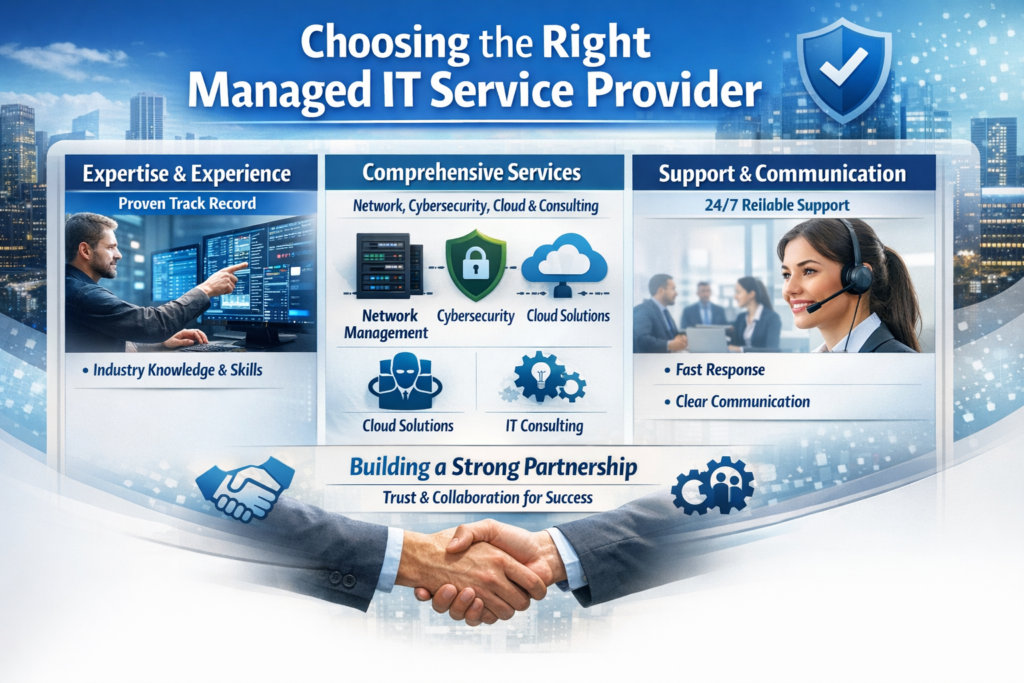
Another important factor is the range of services offered. Businesses should look for an MSP that provides comprehensive IT solutions, including network management, cybersecurity, cloud services, and IT consulting. A provider with a wide range of services can meet all of a business’s IT needs and offer integrated solutions that enhance efficiency and performance.
Communication and support are also crucial. A good MSP should offer responsive and reliable support, with clear communication channels and a commitment to customer service. This ensures that businesses can get the assistance they need when they need it, and any issues are resolved promptly. Building a strong partnership with an MSP based on trust and collaboration is essential for long-term success.
Future Outlook: The Evolution of Managed IT Services Beyond 2026
Looking beyond 2026, the future of managed IT services is poised for continued evolution and growth. As technology advances, MSPs will play an increasingly vital role in helping businesses navigate the complexities of the digital landscape. Emerging technologies such as quantum computing, blockchain, and advanced AI will shape the future of IT services, offering new opportunities and challenges.
One of the key areas of evolution will be the integration of AI and automation. MSPs will leverage these technologies to enhance service delivery, improve efficiency, and provide more proactive support. AI-driven analytics will enable MSPs to gain deeper insights into IT performance and identify opportunities for optimization. Automation will streamline routine tasks, allowing MSPs to focus on more strategic initiatives.
Another significant trend will be the expansion of cloud services. As businesses continue to adopt cloud-first strategies, MSPs will evolve to provide more advanced cloud solutions, including hybrid and multi-cloud environments. This will offer businesses greater flexibility, scalability, and resilience, enabling them to innovate and grow in a dynamic market.
In conclusion, managed IT services are set to play a crucial role in driving business growth in 2026 and beyond. By offering cost-effective, scalable, and secure IT solutions, MSPs enable businesses to focus on their core functions, enhance customer experience, and stay competitive. As technology continues to evolve, managed IT services will adapt to meet the changing needs of businesses, ensuring they are well-positioned for success in the digital age.
📞 Free Consultation:
Phone: +91 8056005901
Email: Contact@altf9.tech
Official Website: https://altf9.tech