

In today’s fast-paced business landscape, choosing the right communication system is vital for success. With
remote work becoming the norm and global connectivity at your fingertips, the battle between Cloud PBX and
On-Prem PBX has intensified. Each option offers unique advantages, but which solution aligns best with your
business goals in 2026? In this ultimate guide, we will explore the key differences, benefits, and potential
drawbacks of Cloud PBX and On-Prem PBX solutions. From cost considerations to scalability and security, we’ll
help you navigate this crucial decision-making process. Whether you’re a startup looking for flexibility or an
established enterprise needing robust infrastructure, understanding the nuances of these systems will
empower you to make an informed choice. Let’s dive deep into the features that make each solution stand out,
ensuring your business stays connected and competitive in the evolving digital landscape.
Understanding Cloud PBX
Cloud Private Branch Exchange (PBX) is a modern telecommunication solution hosted over the internet. It
eliminates the need for traditional on-site hardware by leveraging cloud-based infrastructure. In this setup, all
the necessary hardware and software are managed by a third-party service provider, allowing businesses to
focus on their core operations without worrying about the intricacies of their communication system.
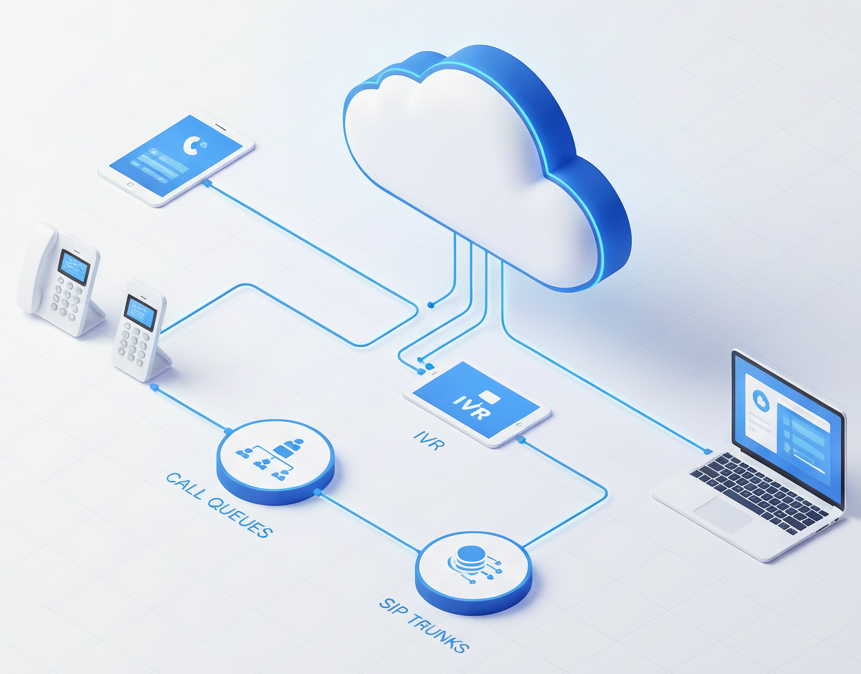
One of the most significant advantages of Cloud PBX is its accessibility. Since the system operates over the internet, employees can connect from virtually anywhere, provided they have an internet connection. This feature is particularly beneficial for businesses with remote workers or multiple office locations. The seamless integration of Cloud PBX ensures that all team members stay connected, regardless of their physical location.
Moreover, Cloud PBX systems are known for their flexibility and scalability. As your business grows, you can
easily add or remove users without the hassle of reconfiguring hardware. Service providers typically offer
various subscription plans, allowing you to choose one that fits your current needs and scale up as necessary.
This pay-as-you-go model can be particularly cost-effective for startups and small businesses looking for a
communication solution that can grow with them.
Understanding On-Prem PBX
On-Premise PBX, or On-Prem PBX, is the traditional telecommunication system where the hardware and
software are installed and maintained on-site within the company’s premises. This setup gives businesses full
control over their communication infrastructure, allowing for extensive customization to meet specific needs.
Companies with unique requirements or those in regulated industries often prefer On-Prem PBX systems for
their ability to tailor and secure their communication networks.
One of the key aspects of On-Prem PBX is its reliability. Since the system is housed locally, it is not reliant on the
internet for operation, reducing the risk of downtime due to connectivity issues. This can be a critical factor for
businesses that require uninterrupted communication, such as customer service centers or emergency services.
The presence of a dedicated IT team to manage and troubleshoot the system further enhances its dependability.
On-Prem PBX also offers advanced features and integrations that can be customized to suit the specific needs of
a business. Companies with existing legacy systems or those requiring complex integrations with other on-site
technologies may find On-Prem PBX to be a more suitable option. The ability to directly control and configure
every aspect of the system can lead to more efficient and tailored communication solutions.
Key Differences Between Cloud PBX and On-Prem PBX
When comparing Cloud PBX and On-Prem PBX, several key differences emerge, each influencing the
decision-making process for businesses. One of the primary distinctions is the location of the hardware and
software. Cloud PBX utilizes off-site servers managed by a third-party provider, while On-Prem PBX relies on
equipment installed at the business’s physical location. This fundamental difference impacts factors such as
control, maintenance, and cost.
Another notable difference is the dependency on internet connectivity. Cloud PBX requires a stable internet
connection to function effectively, making it critical for businesses to have reliable broadband services. In
contrast, On-Prem PBX operates independently of the internet, which can be advantageous in areas with less
reliable connectivity. This independence adds a layer of resilience to On-Prem systems, particularly in
scenarios where internet outages could disrupt operations.
The cost structure also varies significantly between the two systems. Cloud PBX typically involves a
subscription-based model with predictable monthly fees, including maintenance and updates. This can be
financially advantageous for businesses with limited upfront capital. On the other hand, On-Prem PBX requires
a substantial initial investment in hardware and installation, followed by ongoing maintenance costs. However,
this upfront expenditure can be offset by lower long-term operational costs for businesses with sufficient
resources to manage their in-house systems.
Advantages of Cloud PBX
Cloud PBX offers a range of benefits that make it an attractive option for modern businesses. One of the most
significant advantages is its cost-effectiveness. With Cloud PBX, businesses can avoid the high upfront costs
associated with purchasing and installing traditional PBX hardware. Instead, they can opt for a
subscription-based model that includes maintenance and upgrades, making it easier to manage budgets and
predict expenses.
Another major advantage is the ease of scalability. As businesses grow, their communication needs can change
rapidly. Cloud PBX allows companies to scale their systems up or down with minimal hassle. Adding new users
or features can be done quickly and easily, without the need for additional hardware or complex
reconfigurations. This flexibility is especially beneficial for startups and small businesses that need to adapt to
changing conditions.
Cloud PBX also excels in terms of accessibility and mobility. With the increasing prevalence of remote work,
having a communication system that can support employees regardless of their location is essential. Cloud PBX
enables seamless connectivity through internet-based solutions, allowing employees to make and receive calls
from their devices, whether they are in the office, at home, or on the go. This capability ensures that businesses
remain connected and productive, even in a distributed work environment.
Advantages of On-Prem PBX
On-Prem PBX systems also offer several compelling advantages, particularly for businesses with specific requirements or those seeking more control over their communication infrastructure. One of the primary benefits is the ability to customize the system to meet unique business needs. Since the hardware and software are managed on-site, companies have the flexibility to configure features and integrations that align with their operational requirements.

Reliability is another key advantage of On-Prem PBX. Because the system is not dependent on internet
connectivity, it can continue to operate even during internet outages. This can be particularly crucial for
businesses that require uninterrupted communication, such as emergency services or industries with critical
communication needs. The presence of an on-site IT team to manage and troubleshoot the system further
enhances its reliability.
Security is often a top concern for businesses, and On-Prem PBX can offer a higher level of control over data
protection. With the system housed within the company’s premises, businesses can implement their own
security measures and protocols to safeguard sensitive information. This level of control can be particularly
important for industries with strict regulatory requirements or those handling confidential data. By managing
security internally, businesses can ensure compliance and protect their communication networks from
external threats.
Cost Comparison: Cloud PBX vs On-Prem PBX
When evaluating the cost implications of Cloud PBX and On-Prem PBX, it’s important to consider both the initial
investment and ongoing expenses. Cloud PBX typically operates on a subscription-based model, which means
businesses can avoid the substantial upfront costs associated with purchasing and installing traditional PBX
hardware. Instead, they pay a predictable monthly fee that covers maintenance, updates, and support, making
it easier to manage cash flow and budget effectively.
In contrast, On-Prem PBX requires a significant initial investment in hardware, software, and installation. This
upfront expenditure can be a barrier for some businesses, particularly startups or those with limited capital.
However, once the system is installed, the ongoing costs may be lower compared to Cloud PBX, as businesses
are not subject to monthly subscription fees. Maintenance and support costs will still apply, but they can be
managed internally or through third-party service providers.
Another factor to consider is the total cost of ownership (TCO) over the system’s lifespan. While Cloud PBX may
have lower upfront costs, the cumulative subscription fees over several years can add up. Conversely, On-Prem
PBX may have higher initial costs, but the long-term expenses may be reduced, particularly if the business has
the resources to manage and maintain the system in-house. Ultimately, the choice between Cloud PBX and
On-Prem PBX will depend on the business’s financial strategy, budget constraints, and long-term goals.
Security Considerations for Cloud PBX and On-Prem PBX
Security is a critical consideration when choosing between Cloud PBX and On-Prem PBX, as both systems have
unique vulnerabilities and protective measures. Cloud PBX providers typically implement robust security
protocols to safeguard their infrastructure, including encryption, firewalls, and intrusion detection systems.
These measures help protect data transmitted over the internet and ensure that communication remains
secure.
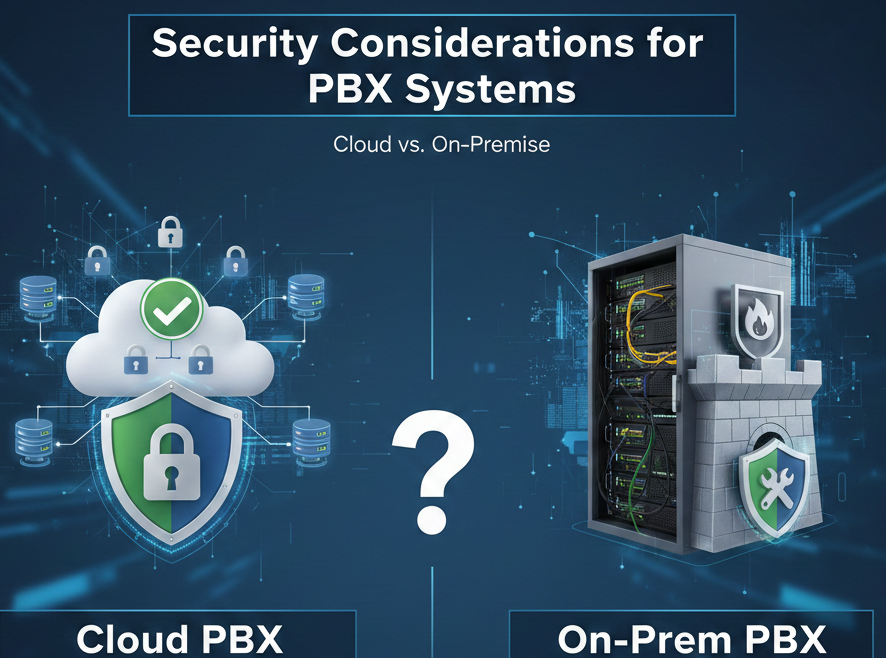
However, Cloud PBX also introduces potential security risks, particularly related to data privacy and control. Since the system is managed by a third-party provider, businesses must trust that the provider will handle their data responsibly and comply with relevant regulations. To mitigate these risks, it’s essential to choose a reputable provider with a strong track record of security and compliance. Additionally, businesses should implement their own security measures, such as strong passwords and multi-factor authentication, to further protect their communication systems.
On the other hand, On-Prem PBX offers businesses greater control over their security measures. With the
system housed on-site, companies can implement their own security protocols and monitor the network for
potential threats. This level of control can be particularly important for industries with strict regulatory
requirements or those handling sensitive data. However, maintaining an On-Prem PBX system also requires a
dedicated IT team with the expertise to manage and secure the network. Businesses must be prepared to invest
in the necessary resources to ensure their communication infrastructure remains protected.
Scalability and Flexibility: Which is Better?
Scalability and flexibility are crucial factors when choosing a communication system, and both Cloud PBX and
On-Prem PBX offer distinct advantages in these areas. Cloud PBX excels in its ability to scale quickly and easily.
As businesses grow or their needs change, they can add or remove users, features, and services with minimal
effort. This scalability is particularly beneficial for startups and small businesses, as it allows them to adapt to
changing conditions without the need for significant infrastructure changes.
Cloud PBX also offers a high degree of flexibility, enabling employees to connect from anywhere with an
internet connection. This is especially important in today’s increasingly remote and distributed work
environments. With Cloud PBX, businesses can support remote work seamlessly, ensuring that employees
remain connected and productive regardless of their location. The ability to access the system from various
devices, including smartphones, tablets, and laptops, further enhances its flexibility.
On-Prem PBX, while offering scalability, may require more effort and investment to achieve the same level of
flexibility. Scaling an On-Prem system typically involves purchasing additional hardware and making
configuration changes, which can be time-consuming and costly. However, for businesses with specific needs or
those requiring extensive customization, On-Prem PBX’s ability to tailor the system to their exact requirements
can be a significant advantage. The choice between Cloud PBX and On-Prem PBX will ultimately depend on the
business’s priorities, resources, and long-term goals.
Conclusion: Making the Right Choice for Your Business
Choosing between Cloud PBX and On-Prem PBX is a critical decision that can have a significant impact on your
business’s communication infrastructure. Both systems offer unique advantages and potential drawbacks, and
the right choice will depend on your specific needs, goals, and resources. By understanding the key differences,
benefits, and considerations associated with each option, you can make an informed decision that aligns with
your business’s priorities and ensures effective communication in the evolving digital landscape.
For businesses seeking cost-effectiveness, flexibility, and scalability, Cloud PBX may be the ideal solution. Its
subscription-based model, ease of scaling, and support for remote work make it a compelling option for
startups and small businesses looking to grow and adapt quickly. However, it’s essential to consider the
potential security risks and ensure that you choose a reputable provider with a strong track record of
compliance and data protection.
On the other hand, established enterprises or businesses with specific requirements may find On-Prem PBX to
be a better fit. Its reliability, customization options, and control over security make it a robust choice for
companies with the resources to manage their communication infrastructure in-house. By carefully evaluating
your business’s needs and weighing the pros and cons of each system, you can choose the best solution to keep
your team connected and competitive in 2026 and beyond
📞 Free Consultation:
- Phone: +91 8056005901
- Email: Contact@altf9.tech
- Book Appointment for Free Consultation – Click here