

In today’s fast-paced business world, effective communication is essential for success. With 3CX, a powerful and versatile VoIP solution, you can streamline your communication while maintaining control over your costs. But navigating 3CX pricing can feel overwhelming, especially when dealing with various licensing options, hosting plans, and call costs.
Whether you’re a small business owner looking to enhance your telephony system or an IT professional aiming to implement a robust communication strategy, understanding the intricacies of 3CX pricing is paramount to making an informed decision. This ultimate guide will break down the complexities of 3CX licensing, helping you uncover the best options that align with your unique needs. Get ready to demystify hosting choices and call costs so you can unlock the full potential of 3CX, ensuring your business communicates more effectively and efficiently than ever before!
Understanding 3CX Licensing Models
Navigating the world of 3CX licensing can be challenging without a clear understanding of the different models
available. 3CX offers a range of flexible licensing options tailored to fit the diverse needs of businesses, from
small startups to large enterprises. The licensing structure is primarily divided into three categories: Standard,
PRO, and Enterprise. Each tier includes a set of features designed to accommodate varying levels of complexity
and functionality.
The Standard license is the entry-level option, providing essential VoIP capabilities suitable for small
businesses. This license includes basic features such as call forwarding, voicemail, and conference calling. It’s a
cost-effective solution for organizations that require fundamental communication tools without the need for
advanced functionalities. However, as businesses grow, their communication needs often become more
complex, necessitating a move to a higher tier.
The PRO license offers a more comprehensive set of features, making it ideal for medium-sized businesses with
more sophisticated communication requirements. This tier includes additional functionalities such as call
recording, reporting, and integration with CRM systems. The ability to monitor and manage calls more
effectively can significantly enhance business operations. For enterprises that demand the highest level of
functionality, the Enterprise license provides all the features of the PRO license, along with advanced
capabilities like call center features and increased scalability. This tier is designed for large organizations with
extensive communication needs, ensuring they have the tools necessary to maintain efficient and effective
communication.
Breakdown of 3CX Hosting Options
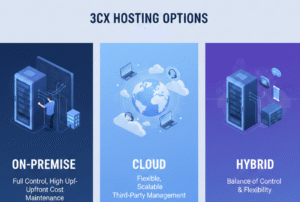
When it comes to hosting your 3CX system, you have several options to consider, each with its own set of advantages and potential drawbacks. The primary hosting options include on-premise, cloud, and hybrid solutions. Understanding these options is crucial for determining the best fit for your business.
On-premise hosting involves installing the 3CX system on your own servers within your physical location. This
option provides maximum control over your communication infrastructure, allowing for customization and
integration with existing systems. It’s an excellent choice for businesses with stringent security requirements or
those with the in-house expertise to manage and maintain the servers. However, on-premise hosting can
involve higher upfront costs and ongoing maintenance responsibilities, which may not be feasible for all
organizations.
Cloud hosting, on the other hand, offers a more flexible and scalable solution. With cloud hosting, the 3CX
system is hosted on a remote server managed by a third-party provider. This option eliminates the need for
physical hardware and reduces the burden of maintenance and upgrades. Cloud hosting is particularly
beneficial for businesses with fluctuating communication needs, as it allows for easy scalability. Additionally, it
provides access to the latest features and updates without the need for manual intervention. However, relying
on an external provider means entrusting your data to a third party, which may raise concerns about data
security and privacy.
A hybrid hosting solution combines elements of both on-premise and cloud hosting. This approach allows
businesses to maintain critical components on-site while leveraging the benefits of the cloud for other aspects
of their communication system. Hybrid hosting can offer a balance of control, flexibility, and security, making
it an attractive option for organizations with specific requirements. Ultimately, the choice of hosting option will
depend on factors such as budget, security concerns, and the level of control desired.
Analyzing Call Costs with 3CX
Understanding call costs is a vital aspect of managing your communication expenses with 3CX. Call costs can
vary significantly depending on several factors, including the type of calls made, the destinations, and the
pricing structure of your service provider. By analyzing these elements, you can make informed decisions to
optimize your call costs.

Firstly, it’s essential to differentiate between internal and external calls. Internal calls, made within the same organization, are typically free of charge with 3CX, as they utilize the internal network. This can result in substantial cost savings, especially for businesses with multiple locations or remote employees. On the other hand, external calls, made to numbers outside the organization, incur charges based on the destination and duration of the call.
The cost of external calls is influenced by several factors, including the geographical location of the recipient and the type of call (landline or mobile). International calls are generally more expensive than domestic calls, and calling mobile numbers often incurs higher charges than calling landlines. It’s important to review the pricing structure of your service provider and consider using SIP trunks to reduce costs. SIP trunks allow for more cost effective routing of calls over the internet, potentially leading to significant savings.
The cost of external calls is influenced by several factors, including the geographical location of the recipient
and the type of call (landline or mobile). International calls are generally more expensive than domestic calls,
and calling mobile numbers often incurs higher charges than calling landlines. It’s important to review the
pricing structure of your service provider and consider using SIP trunks to reduce costs. SIP trunks allow for
more cost-effective routing of calls over the internet, potentially leading to significant savings.
Additionally, 3CX offers features such as least cost routing (LCR) and call accounting, which can help manage
call costs more effectively. Least cost routing automatically selects the most cost-efficient route for each call,
while call accounting provides detailed reports on call usage and expenses. By leveraging these tools,
businesses can gain better visibility into their call costs and identify opportunities for optimization and savings.
Comparing On-Premise vs. Cloud Hosting
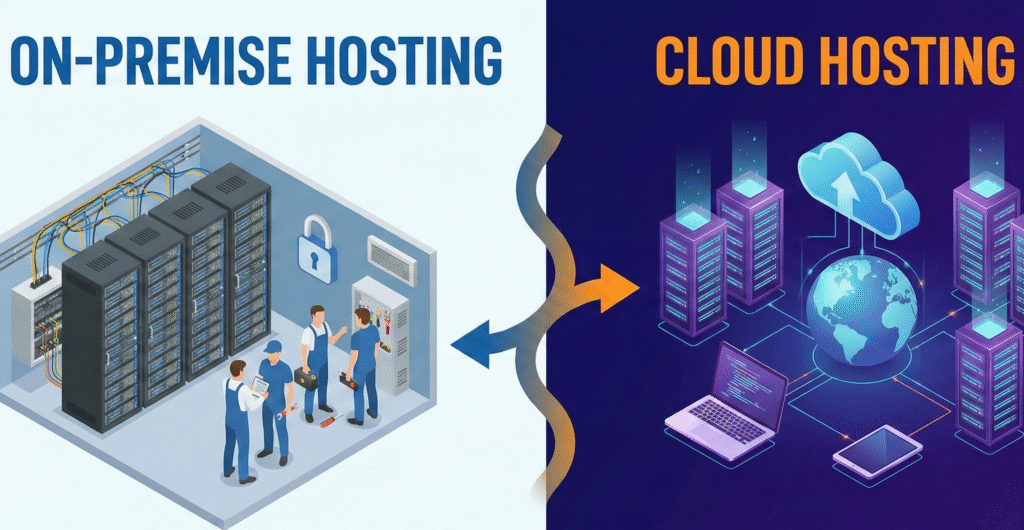
Choosing between on-premise and cloud hosting for your 3CX system is a critical decision that can impact your communication infrastructure and overall business operations. Each option has its own set of advantages and considerations, making it important to evaluate them carefully in the context of your organization’s needs.
On-premise hosting offers a high level of control and customization, as the 3CX system is installed on your own
servers. This allows for integration with existing systems and the ability to configure the setup according to
your specific requirements. On-premise hosting is a preferred choice for businesses with stringent security
policies, as it ensures that sensitive data remains within the organization’s physical premises. However, this
option involves higher upfront costs for hardware and ongoing maintenance responsibilities, which may
require dedicated IT resources.
In contrast, cloud hosting provides a more flexible and scalable solution. With cloud hosting, the 3CX system is
hosted on remote servers managed by a third-party provider. This eliminates the need for physical hardware
and reduces the burden of maintenance and upgrades, as the provider handles these tasks. Cloud hosting is
particularly beneficial for businesses with variable communication needs, as it allows for easy scalability and
access to the latest features and updates. Additionally, cloud hosting can offer cost savings by reducing the need
for in-house IT resources and infrastructure.
However, relying on an external provider for cloud hosting means entrusting your data to a third party, which
may raise concerns about data security and privacy. It’s important to choose a reputable provider with strong
security measures in place to mitigate these risks. Ultimately, the choice between on-premise and cloud hosting
will depend on factors such as budget, security requirements, and the level of control desired. Some
organizations may also consider a hybrid approach, combining elements of both on-premise and cloud hosting
to achieve a balance of control, flexibility, and security.
Factors Influencing 3CX Pricing
Several factors can influence the pricing of your 3CX system, making it important to consider these elements
when evaluating your options. Understanding these factors can help you make informed decisions and
optimize your communication costs.
One of the primary factors influencing 3CX pricing is the licensing model you choose. As mentioned earlier, 3CX
offers Standard, PRO, and Enterprise licenses, each with its own set of features and corresponding costs. The
choice of license will depend on the size of your organization and the complexity of your communication needs.
It’s important to carefully evaluate the features included in each tier to ensure you select the most appropriate
license for your requirements.
Another factor that can impact pricing is the number of simultaneous calls your system needs to handle. 3CX
licenses are based on the number of simultaneous calls, rather than the number of users or extensions. This
means that you’ll need to estimate the peak call volume for your organization and choose a license that can
accommodate this capacity. Businesses with higher call volumes may require more advanced licenses, which
can increase the overall cost.
Hosting options also play a significant role in determining 3CX pricing. On-premise hosting involves higher
upfront costs for hardware and ongoing maintenance, while cloud hosting offers a more flexible and scalable
solution with lower initial investment. The choice of hosting option will depend on your budget, security
requirements, and the level of control desired. Additionally, the cost of SIP trunks and service providers can
influence overall pricing, as these elements determine the cost of external calls and connectivity.
Tips for Reducing 3CX Costs
Optimizing your 3CX costs involves a combination of strategic planning and leveraging available features to
their fullest potential. By following a few practical tips, you can reduce your communication expenses while
maintaining a high level of functionality and efficiency.
One effective way to reduce costs is by selecting the most appropriate licensing model for your organization.
Carefully evaluate the features included in each tier and choose the one that best aligns with your needs. Avoid
paying for advanced features that you don’t require, and consider upgrading your license only when necessary.
Additionally, take advantage of 3CX’s flexible licensing options, such as annual or perpetual licensing, to find
the most cost-effective solution for your budget.
Another cost-saving measure is to optimize your call routing and usage. Use least cost routing (LCR) to
automatically select the most cost-efficient route for each call, and monitor call accounting reports to identify
areas where call usage can be optimized. Encourage employees to use internal calls and features such as
voicemail and conference calling to reduce reliance on external calls. Additionally, consider using SIP trunks to
lower the cost of external calls by routing them over the internet.
Finally, consider your hosting options carefully. While on-premise hosting offers greater control, it involves
higher upfront costs and ongoing maintenance. Cloud hosting can provide a more flexible and scalable solution
with lower initial investment, potentially leading to cost savings. Evaluate the pros and cons of each hosting
option and choose the one that best fits your budget and requirements. By implementing these strategies, you
can effectively reduce your 3CX costs while maintaining a robust and efficient communication system.
Common Misconceptions about 3CX Pricing
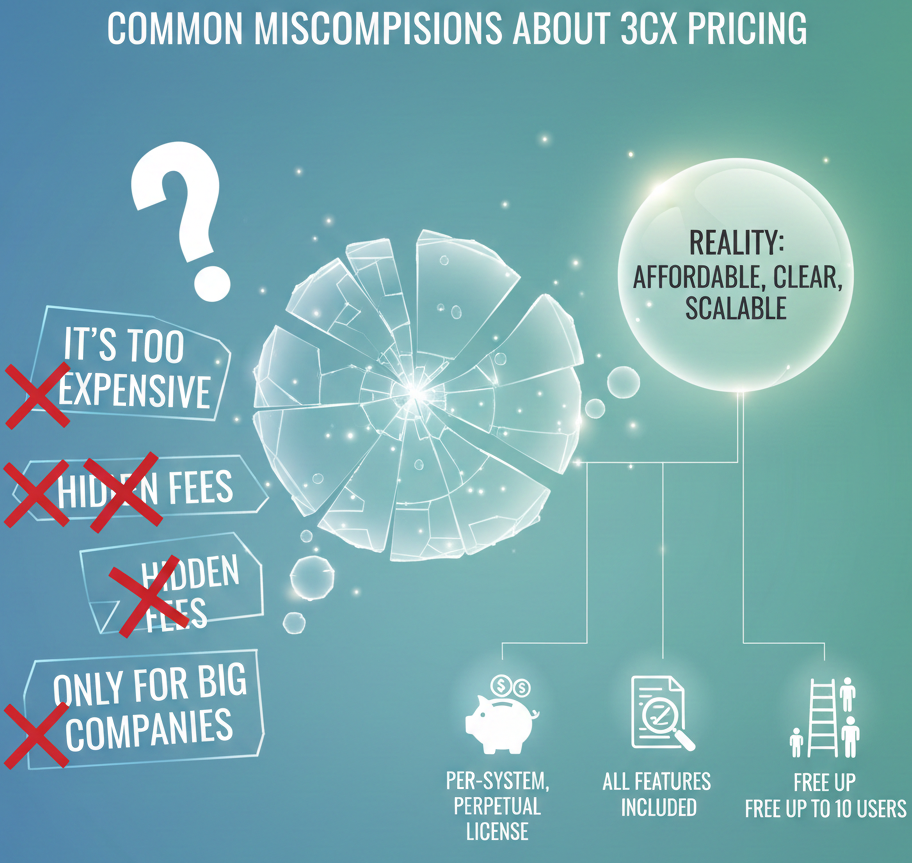
There are several common misconceptions about 3CX pricing that can lead to confusion and misinformed decisions. By addressing these misconceptions, you can gain a clearer understanding of the actual costs involved and make more informed choices for your organization.
One common misconception is that 3CX pricing is solely based on the number of users or extensions. In reality,3CX licenses are based on the number of simultaneous calls, not the number of users. This means that you can have an unlimited number of users or extensions, but the system’s capacity to handle calls concurrently will determine the appropriate license. Understanding this distinction is crucial for accurately estimating yourcommunication needs and selecting the right license.
Another misconception is that cloud hosting is always more expensive than on-premise hosting. While cloud
hosting involves ongoing subscription costs, it can offer significant cost savings by eliminating the need for
physical hardware and reducing maintenance responsibilities. Additionally, cloud hosting provides scalability
and access to the latest features without the need for manual upgrades. On-premise hosting, on the other hand,
involves higher upfront costs for hardware and ongoing maintenance, which can add up over time. It’s
important to evaluate the total cost of ownership for both hosting options to determine the most cost-effective
solution.
A third misconception is that all 3CX features are included in every license tier. In reality, the features available
depend on the licensing model chosen (Standard, PRO, or Enterprise). Each tier includes a different set of
functionalities, with higher tiers offering more advanced features. It’s essential to carefully review the features
included in each tier and choose the one that aligns with your organization’s needs. By addressing these
common misconceptions, you can gain a more accurate understanding of 3CX pricing and make informed
decisions for your communication system.
Real-World Examples of 3CX Pricing Scenarios
To provide a clearer understanding of 3CX pricing, let’s explore some real-world examples of how different
businesses might approach their communication needs and associated costs. These scenarios will illustrate the
practical application of the concepts discussed in this guide.
Scenario 1: A small business with 10 employees is looking to implement a basic VoIP system to improve internal
communication. They opt for the Standard license, which provides essential features such as call forwarding,
voicemail, and conference calling. The business chooses on-premise hosting, as they have an existing server
infrastructure and in-house IT resources to manage the system. By selecting the Standard license and
leveraging their existing infrastructure, the business can implement a cost-effective communication solution
that meets their needs.
Scenario 2: A medium-sized company with 50 employees requires more advanced communication features,
such as call recording, reporting, and CRM integration. They choose the PRO license to access these
functionalities and decide on cloud hosting for its scalability and reduced maintenance burden. The company
also uses SIP trunks to lower the cost of external calls by routing them over the internet. By selecting the PRO
license and cloud hosting, the company can benefit from advanced features and scalability while keeping their
communication costs manageable.
Scenario 3: A large enterprise with 200 employees has extensive communication needs, including call center
features and increased scalability. They opt for the Enterprise license to access the full range of 3CX
functionalities and choose a hybrid hosting solution to maintain critical components on-site while leveraging
the cloud for other aspects of their communication system. This approach provides a balance of control,
flexibility, and security, ensuring the enterprise can meet its complex communication requirements. By
selecting the Enterprise license and hybrid hosting, the enterprise can maintain a robust and efficient
communication system tailored to their needs.
These real-world examples demonstrate how different businesses can approach their communication needs
and associated costs with 3CX. By carefully evaluating their requirements and selecting the appropriate
licensing model and hosting option, organizations can implement cost-effective and efficient communication
solutions.
Conclusion and Next Steps for 3CX Users
Mastering 3CX pricing involves understanding the various licensing models, hosting options, and call costs to
make informed decisions that align with your organization’s needs. By carefully evaluating these elements and
considering factors such as the number of simultaneous calls, hosting preferences, and feature requirements,
you can optimize your communication costs while maintaining a high level of functionality and efficiency.
As you move forward with implementing or optimizing your 3CX system, consider leveraging the tips provided
in this guide to reduce costs and maximize the value of your investment. Evaluate your current communication
needs and select the most appropriate licensing model, optimize call routing and usage, and choose the hosting
option that best fits your budget and requirements. By doing so, you can ensure that your business
communicates more effectively and efficiently than ever before.
If you’re new to 3CX, take the time to explore the various features and functionalities available in each license
tier. Consider starting with a lower-tier license and upgrading as your communication needs evolve.
Additionally, take advantage of 3CX’s flexible licensing options and choose the one that offers the best value for
your budget. Whether you’re a small business owner or an IT professional, understanding the intricacies of 3CX
pricing will empower you to make informed decisions and unlock the full potential of this powerful VoIP
solution.
By following the guidance provided in this ultimate guide, you can demystify 3CX pricing and implement a
robust communication strategy that supports your business’s growth and success. Embrace the opportunities
that 3CX offers and take the next steps toward enhancing your telephony system, ensuring your busines remains competitive in today’s fast-paced business world.
📞 Free Consultation:
- Phone: +91 8056005901
- Email: Contact@altf9.tech
- Book Appointment for Free Consultation – Click here